From Peking to Paris – The Story of one remarkable Silver Dawn
When Rolls- Royce designed and produced the Silver Dawn, they never intended it to cross deserts, climb mountain passes, or survive weeks of punishment on some of the toughest roads in the world. And yet, that is exactly what this one has done.
Produced between 1949 and 1955, the Rolls-Royce Silver Dawn was something of a trailblazer in the world of luxury motor cars. It was the first Rolls-Royce to be offered with a standard steel body (along with its sister the Bentley Mk 6)—though a small number were still supplied as a rolling chassis for coachbuilding. In total, only around 780 Silver Dawns were produced making it a relatively rare car.
The move to a standard steel body was Rolls-Royce’s response to the post-war climate, allowing for more consistent production volumes at a time when materials, labour, and demand were all changing. It was a practical decision, but one that never compromised Rolls-Royce’s core values of quality, refinement, and engineering integrity.
In many ways, here at Harvey Wash Ltd, we see the Silver Dawn as a “baby Wraith”—sharing much of the elegance and mechanical aspects of its larger sibling, but in a slightly more compact, understated package. It’s slightly more discreet than some of its predecessors (can a Rolls-Royce ever truly be discreet?!), but it quietly gets on with the job, which perhaps explains why in this instance it has proven to be such a capable companion on some of the toughest rallies in the world.
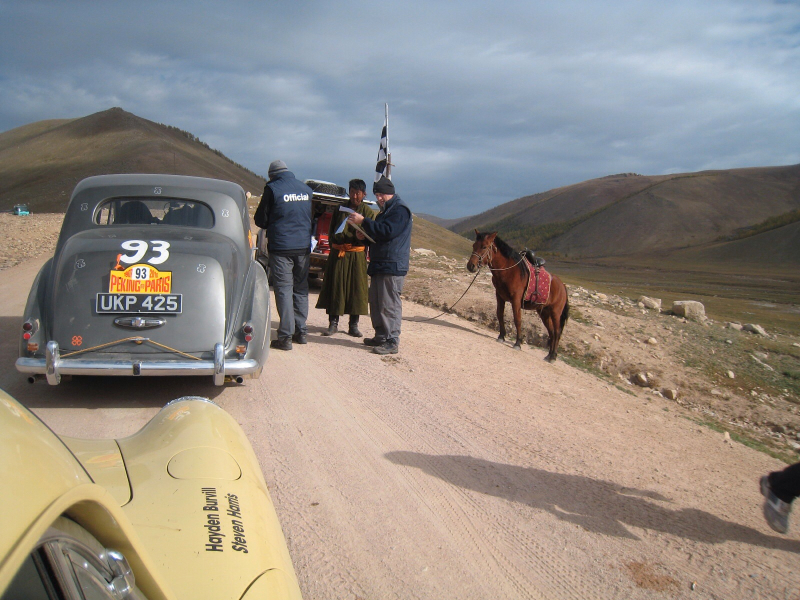
This particular Silver Dawn (registration UKP 425) was originally delivered in April 1955 to its first owner, Mr H. L Waddington. And after that, its history seems to unfortunately get rather lost. We haven’t actually been able to trace any history for it between then and 2009 when our client purchased it, which suggests that perhaps nothing particularly remarkable happened to it in that time. Our client did mention that he had been told by the previous owner that it had “lived a very quiet life and seen very little rain”… I wonder if we should ask him whether he ever told the previous owner that he intended to do international endurance rallies in it!
The Rolls Royce Silver Dawn does at first glance seem an unlikely choice for a Rally car, but its engineering integrity, size and comfort quickly revealed why it worked so well once properly prepared.
From 2009 onwards, the Harvey Wash Ltd team have prepared and maintained the car specifically for long-distance rallying. Our approach was never to fundamentally alter the Silver Dawn, but to make it strong, dependable, and capable of dealing with conditions far removed from those it was designed for—while retaining its essential Rolls-Royce character.
The car has a spectacular rally resume. In 2009 it completed the Casablanca Challenge: A 10-day rally beginning in Kent and passing through Le Mans, Burgos, Ronda, Meknes, Midelt, Ouarzazate and finishing in Marrakesh. The route featured “a maze of roads” on the edge of the Atlas Mountains which had only recently been covered in Tarmac at the time. Prior to that these roads were just goat trails accessible by 4x4s, and deemed impassable for classic cars. This meant the opportunity to explore newly opened up terrain. The route also boasted 3 “super long” mountain climbs.
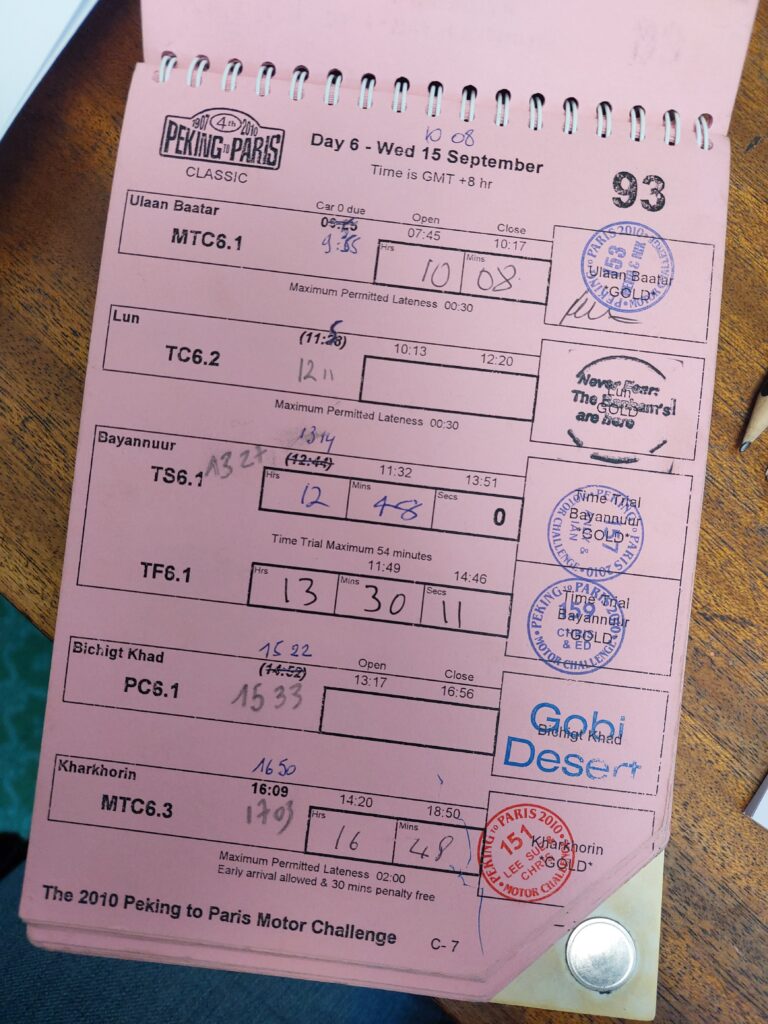
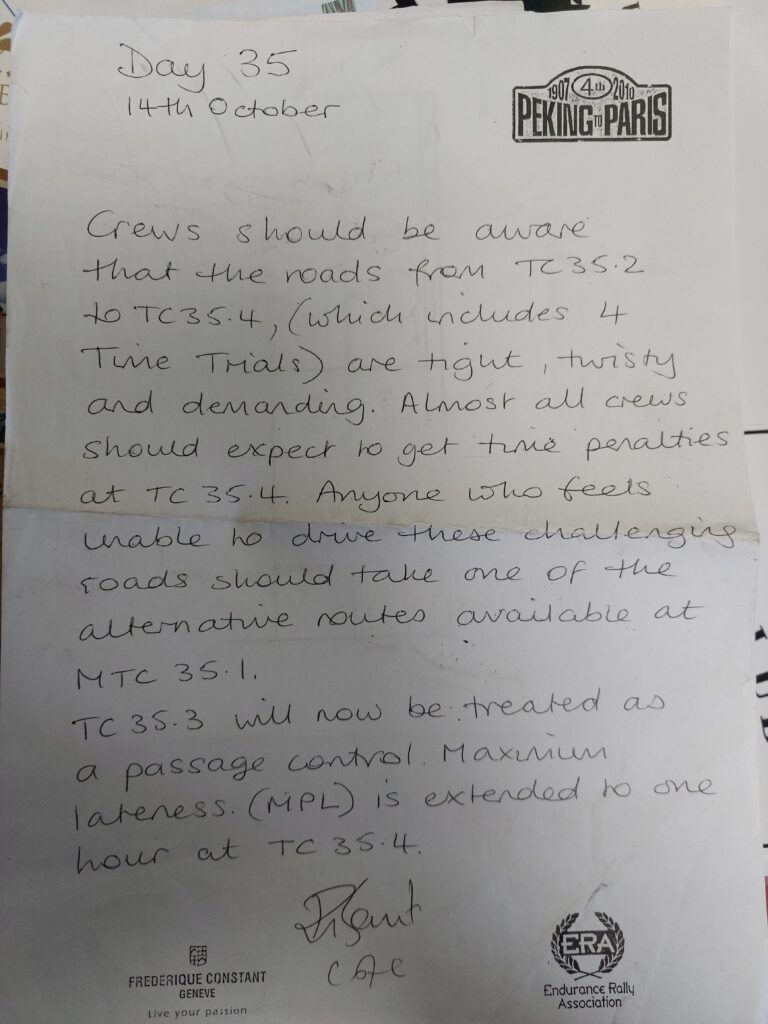
In 2010 it completed the Peking to Paris Rally, an event that remains the longest and one of the most demanding endurance rallies in the world, with an entry cost of £69,000. The first Peking to Paris race took place in 1907 with only 5 teams. There were no rules in the original race which took them across unmapped terrain where there were few roads, and the only support crews were camels carrying fuel. The winner was quite simply the first person to reach Paris. The race looked a little different by 2010 – of course the route still provided very challenging terrain (deserts and extremely remote areas) but the teams (over 100 of them) did benefit from satellite communication, GPS tracking, organised checkpoints and huge support teams. In 1907 the event set out to prove that cars were reliable and could cross continents. By 2010 it was definitely more of an organised endurance race, but an incredible experience nonetheless.
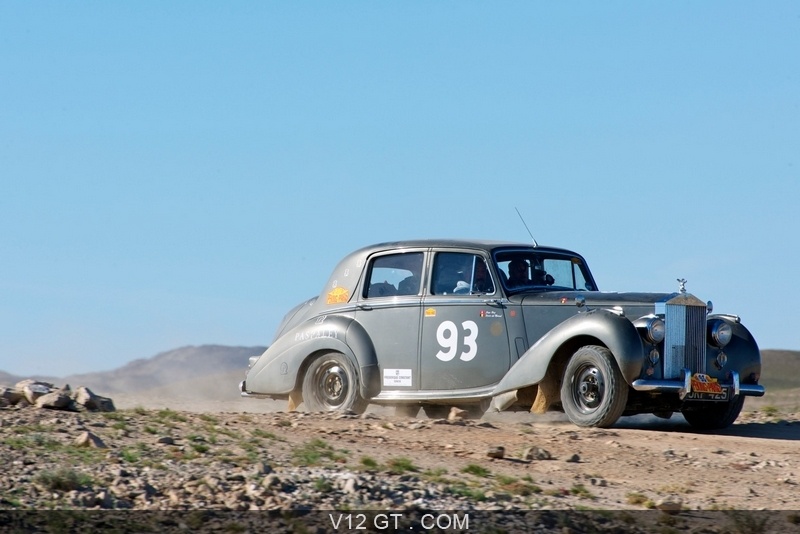
across the dusty terrain on the Peking to Paris Rally
Africa followed with the Classic Safari Challenge in 2011. A 20 day 5896km trip through six countries from Dar es Salaam in Tanzania to Cape Town. The event travelled primarily through Kenya, with routes through remote savannah, mountains, and rough dirt roads. Only open to pre 1978 vehicles, the event is considered one of the hardest historic rallies in the world because of extreme heat, major altitude changes, very long competitive stages, wildlife-area terrain, heavy mechanical strain, and limited service support. Unlike European events it has no shorter stages and is a true endurance test for both driver and car.
2014 saw the Dawn tackling Asia with the Road to Mandalay Rally. This rally attracted 70 entries from 18 different countries for the timed rally of 10,000-kms from Singapore, crossing Malaysia and Thailand, and then entering Burma in an historic border crossing to finish in Mandalay, marking one of the first major historic rallies in the country after it opened up to the world. Dozens of classic and vintage cars, ranging from early 20th-century vehicles to 1970s sports cars, drove thousands of kilometres, navigating both competitive trials and long road sections that tested driving skill and mechanical reliability. The route offered a unique cultural backdrop, passing through tropical landscapes, historic temples, and remote regions rarely seen by visitors, while also highlighting the hospitality of local communities.
In 2015, the Silver Dawn tackled the Thunder Dragon Rally. Starting in Calcutta and heading into Bhutan, the Thunder Dragon Rally first took place in 2015 as a three‑week, non‑competitive road rally/tour through the Kingdom of Bhutan and neighbouring regions. Rarely visited by tourists, the three-week Thunder Dragon rally gives drivers the chance to explore the rich cultural heritage and exceptional landscapes Bhutan has to offer, from the snow-capped peaks of the Himalayan Mountains to the subtropical plains and forests.
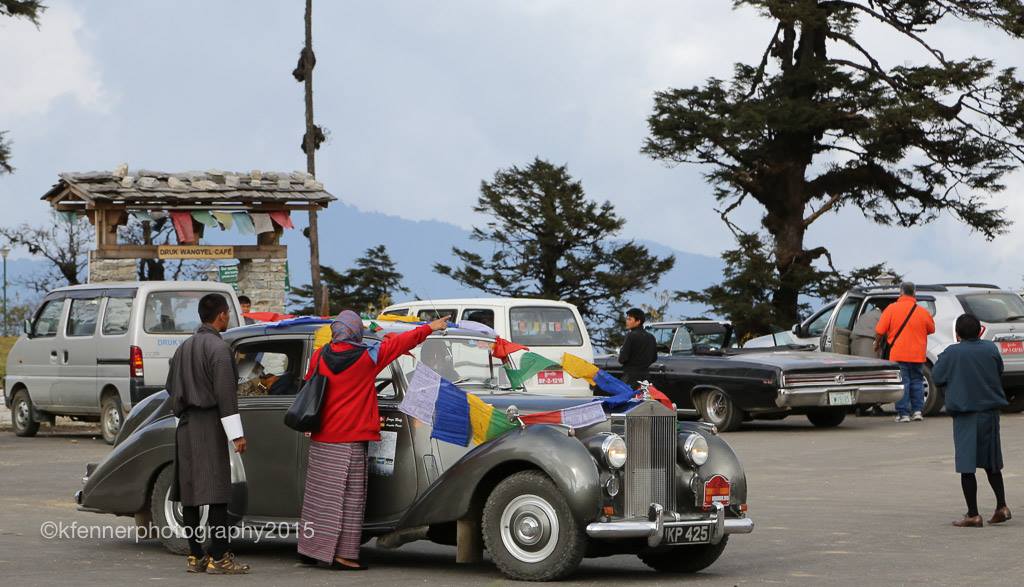
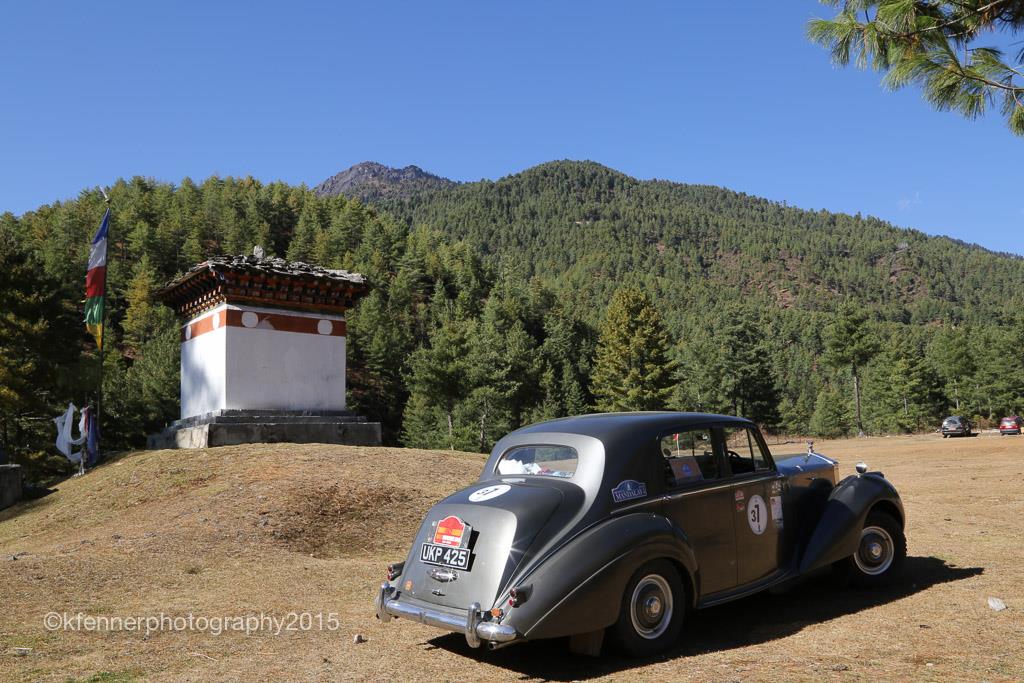
The vehicle has been maintained exclusively in our workshop and prepared to suit each rally’s individual regulations and requirements. As a result, it has proven itself to be not only extremely reliable, but also remarkably comfortable over long distances—something that matters greatly when covering thousands of miles at a time.
With the aim of reliability, we set out to keep the vehicle to its original specification. Before each rally the Silver Dawn was thoroughly serviced and brakes over-hauled. Each rally of course came with its own selection of regulations and recommended modifications.
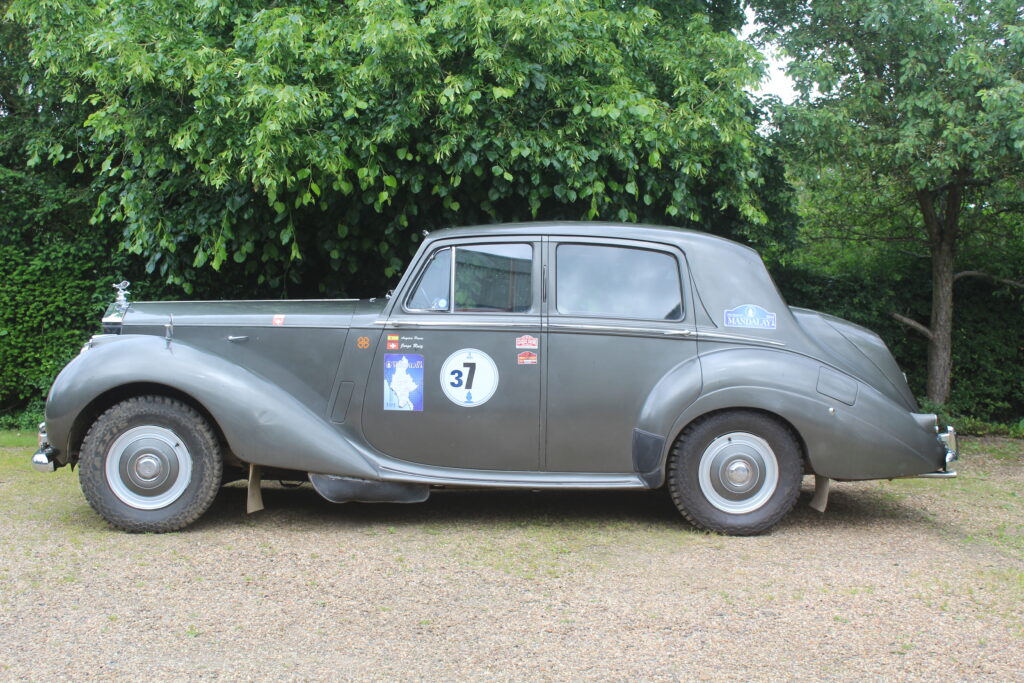
Ther key modifications made were as follows:
Heavy duty type front and rear road springs (both specifically made for the vehicle) were deemed necessary due to the extra weight the vehicle would be carrying (spares, 2x spare wheels with heavy duty tyres, fluids and luggage) and the conditions of the roads (or lack of!) the vehicle would be traveling on.
- To aid with improving road holding and stability, a heavy-duty Harvey Bailey anti-roll bar kit was fitted front to rear. These modifications were made so that the Dawn still retained the degree of comfort and ride expected from a Rolls-Royce.
- 4×4 type 8 ply commercial rated radial tyres were fitted, with an additional two full spare tyres mounted in the passenger compartment (rear seat removed).
- As per the Peking to Paris regulations, Corbeau rally seats and harness were fitted.
- Heavy C48 duty dynamo as fitted to the Bentley S-Type, giving a higher output than the original Silver Dawn dynamo.
- Additional glass fuel filter bowl mounted under the bonnet. The ability to see the fuel flow and contaminates without having to disassemble anything was essential due to the poor quality of fuel in many of the countries being travelled through.
- There were additions of various GPS equipment, extra 12 volt sockets and fire extinguishers. We also supplied a comprehensive selection of spares with the vehicle including gaskets, ignition components, fuel pumps and other essentials. We are very pleased to report that during most of these rallies very little was needed from the spares box!
- Coolant modifications were made as follows: an additional expansion tank was made and added with a pressurized coolant cap. Twin electrical coolant fans were fitted to the radiator behinds the radiator grill, manually operated via a switch on the dashboard.
- After some research an automatic gearbox cooler was added to the bottom of the radiator. A Rolls-Royce service bulletin had been previously issued regarding Phantom VI motor cars operating in slow stop-start town driving (using the same Rolls-Royce licence-built GM Hydra-matic). The automatic gear box oil would overheat causing slipping and poor/jerky gear changes. Do to the very slow nature of some of the sections of the Rally it was deemed sensible to add this modification, using the Phantom VI parts diagrams for the specifications.
- Heavy duty under shields were made using 5mm thick aluminium. 4 separate shields were made to protect engine sump, gearbox, differential and petrol tank.
- Engine and brakes remained standard.
All modifications were added sympathetically so that the vehicle could be returned back to standard specification in the future.
After several years in storage, the car has recently undergone a mild recommissioning to return it to road use. Now offered for sale, it presents a rare opportunity: a Silver Dawn with a genuine competition history, ready for further classic rallying. Equally, all original parts are included should a new owner wish to return the car to standard specification.
When Rolls-Royce designed the Silver Dawn, they never intended it to cross deserts, climb mountain passes, or endure weeks of punishment on some of the toughest roads in the world.
Yet this one did.
In doing so, it quietly demonstrated the very qualities that Rolls-Royce engineering has always stood for: strength, durability, and the ability to keep going long after lesser machines would have given up.
This incredible vehicle is now offered for sale, so that it can begin the next chapter of its life. You can find more details, here
If you have a classic vehicle of your own that needs some attention, do of course get in touch, we’d love to help. You can email us at info@harveywashltd.co.uk or give Matthew and the team a call on 01376 571174.