
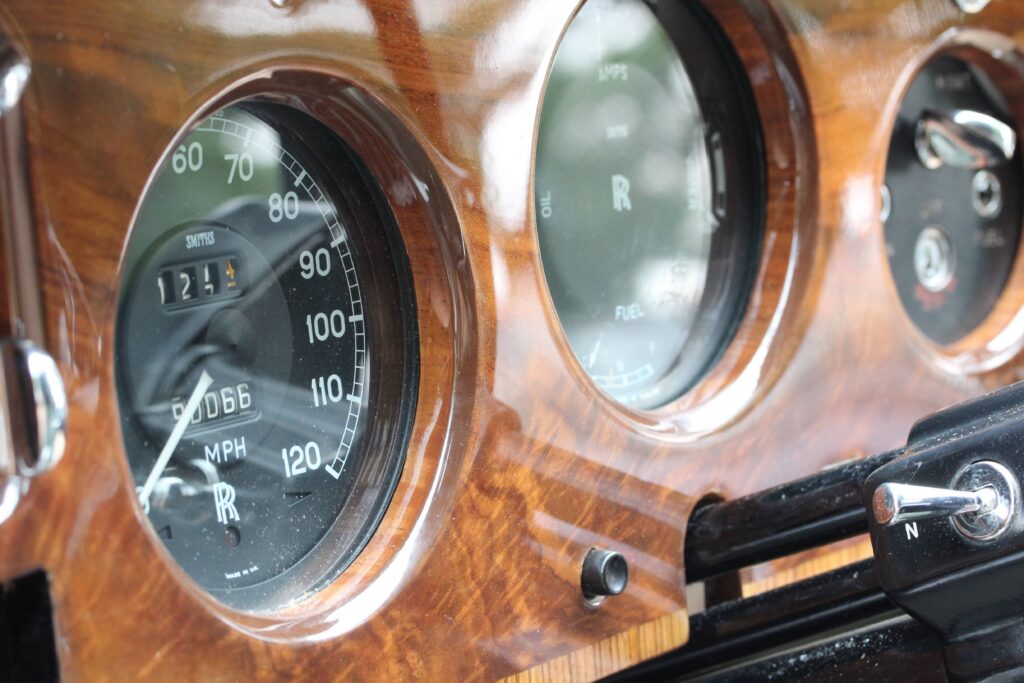
Is Low Mileage Really Better? The Truth About Classic Car Mileage
Low mileage is good. High mileage is bad… Right?
This is a conversation we’ve been having with clients and people within the classic car community quite a lot recently, so we thought it would make a good topic for this quarter’s blog.
There are, of course, some clear advantages to owning a low-mileage classic. Equally, there are certainly some disadvantages to owning a very high-mileage car. But when it comes to classic cars, we think there is actually a balance to be struck, and it isn’t quite as clear-cut as simply looking at the number on the odometer!
What does low mileage actually tell us?
Low mileage can be a very desirable characteristic, particularly if the car has a well-documented history and its condition supports the mileage.
Over the years, we’ve encountered many low-mileage cars. In some cases, the low mileage has been a genuine feature of the car and has contributed positively to its value. But in other cases, the low mileage has actually been something of a disadvantage. The reason is quite simple: if a car is 40 or 50 years old and has only covered 20,000 miles, then it has inevitably spent a significant proportion of its life not being driven. And that’s where things become a little more complicated. A car that has spent decades sitting in a garage may have covered very few miles, but that doesn’t necessarily tell us anything about how well it has been maintained, stored or cared for.
And that raises another very important question….
What does someone actually mean when they tell you that a car has been “really well looked after”?
We’ve heard this phrase countless times, but “well looked after” can mean very different things to different people. Does it mean the car has only covered 20,000 miles? Does it mean it has spent most of its life inside a garage? Does it mean it has always been covered and kept completely dry? Does it mean the owner polished it regularly and took great pride in how it looked? Or does it mean it was serviced every year, regardless of how few miles it had covered?
Ideally, of course, it means all of those things…But they aren’t necessarily the same thing.
A car can be beautifully presented, incredibly low mileage and have been stored in the most favourable conditions imaginable, while at the same time having spent years without being properly serviced or driven, and that can present its own problems because cars are designed to be used.
This absolutely isn’t an argument for taking your 50-year-old Rolls-Royce on a 200-mile commute every day! Heavy use brings its own wear and tear, and we think it’s important to recognise that these cars were never really designed to be treated like modern daily drivers, but there is a difference between sympathetic use and prolonged inactivity.
Cars are machines. They have fluids, seals, gaskets, bearings, pumps, fuel systems, electrical systems and countless other components that are designed to operate. Mechanisms are designed to move, fluids deteriorate, fuel can degrade, batteries discharge, seals and other components can suffer when a car sits unused for long periods. Most importantly, problems that might otherwise have been identified during regular use can remain hidden.
This is also relevant with some of the more electronically dependent later cars. On models such as the GTs, for example, the battery is far more than something that starts the engine. A car that is left standing without being properly maintained or kept on an appropriate charger can develop a whole host of electrical problems.
None of this means that a low-mileage car is bad. It simply means that low mileage is not the same thing as low risk.
A real example…
We’ve had a very good example of this last year. We had an almost immaculate Silver Spirit III come in for sale. It was an absolutely beautiful car and, visually, it was very difficult to fault. It had been owned by the same family and had been kept in a garage, covered and protected.
We could have driven it straight from the beautiful garage that it lived in, and onto a concours and nobody would have questioned it. And it had covered only around 30,000 miles.
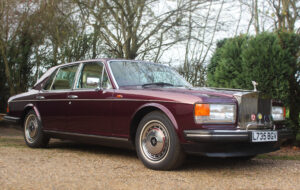
On paper, that sounds like the perfect combination. But there was a catch….
Although the car had been stored extremely well (arguably perfectly) it had seen very little use in the years before it came to us, it hadn’t been serviced for several years and had largely been sitting.
We were of course completely transparent about this when we marketed the car for sale. We only offer cars for sale that we are genuinely passionate about, and being honest about a car’s history, condition and potential shortcomings is just as important as being able to tell people what makes it special. Our aim is always to be as honest and helpful as we can, so that the buyer knows exactly what they are buying. But interestingly, the low mileage that you might have initially thought would be one of its biggest selling points actually put some potential buyers off.
We had buyers who really wanted the car, loved how it looked and could see what a special example it was, but ultimately decided against it because they were concerned about what might happen once a car that had spent so long standing was suddenly returned to regular use.
One buyer even raised the question of how we could guarantee that something such as the head gasket wouldn’t fail once the car was being used again. The honest answer was that we couldn’t, and we wouldn’t pretend otherwise. When we spoke to him our recommendation was that he shouldn’t buy a car that didn’t feel right and that he had doubts about. And he didn’t. It wasn’t the right car for him.
We later found a buyer who understood exactly what they were buying. He saw the car, fell in love with it and was comfortable with its history and the fact that it had been underused. The seller was happy, the buyer was happy, and the car went to someone who genuinely appreciated it.
But it was an interesting experience because the low mileage, which you might assume would make the car more desirable, was actually a deterrent for a number of buyers.
And what about high mileage?
This is where we think the conversation becomes particularly interesting because we’re not convinced that higher mileage is necessarily a bad thing. A high-mileage classic will obviously have experienced more use, there may be greater wear to mechanical components and the interior, and ultimately mileage does of course matter.
But if a 50 year old car has covered 100,000 miles and it has spent its life being regularly serviced, maintained properly, driven sympathetically and repaired whenever something needed attention, that history can actually be very reassuring. You can often learn an enormous amount from how a car has been used. A car with 80,000 miles and a comprehensive history of regular maintenance may tell a much more reassuring story than a 20,000-mile car with long gaps between servicing and years of inactivity. The mileage is higher, but the car has been living and as a result we know its quirks, what it handles well and what perhaps needs some work.
So, what should you actually look at?
For us, mileage should always be considered alongside the rest of the car’s history. But we would also want to know:
How has the car been maintained?
How has it been stored?
How regularly has it been serviced?
Has it been driven regularly?
What work has been carried out over the years?
Does the condition of the car support the mileage being claimed?
And perhaps most importantly:
What happened to the car during the years when it wasn’t being driven?
Because a car that has covered very few miles hasn’t necessarily escaped the effects of time. It’s about finding the balance
Ultimately, of course we don’t think classic cars should be driven into the ground, but we also don’t think they should necessarily be treated as museum pieces. There is a happy middle ground. A classic car benefits from being properly maintained, appropriately used and enjoyed for what it is. After all, these are machines, they were built to move.
There is something rather wonderful about seeing a beautifully maintained classic car being taken out on the road, rather than simply sitting under a cover in a garage because its owner is afraid of adding another 500 miles to the odometer. And equally, there is nothing wrong with buying a genuinely low-mileage example if the history, maintenance and condition all support it. In the right circumstances, low mileage can absolutely be a valuable feature.The important thing is not to assume that the number tells you the whole story.
And sometimes, even the mileage on the odometer isn’t quite as straightforward as it seems…
With some of the older models, it’s not always quite as easy to establish a vehicle’s true mileage.
Many of these cars were fitted with odometers that would go around the clock and return to zero once they reached 100,000 miles. So, a car showing 75,000 miles on the odometer could plausibly have covered 175,000 miles (or 275,000) in reality, having already completed one full revolution on the clock.
One of Mathews’s top tips for gauging mileage on these cars is to take a look at the accelerator pedal. The pedals tend to be ridged to aid grip, and at somewhere around 100,000 miles, you can really begin to see the ridges towards the top of the pedal starting to flatten with wear.
Here you can see a brand-new accelerator pedal, yet to be fitted to a vehicle.

And here we have accelerator pedals from a Silver Cloud at 76,000 miles and a Derby Bentley also showing around 76,000 on the odometer
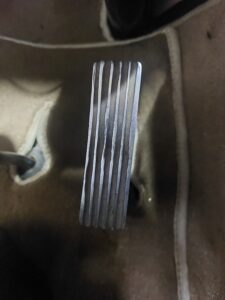
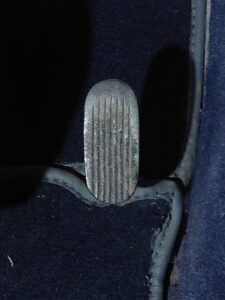
Of course the wear on the pedal would also depend greatly on the driver, footwear and other factors. No single piece of information tells a vehicle’s true story. There are few designs of accelerator pedals over the years, but the principle remains the same. If you’re looking at buying an older Bentley or Rolls-Royce, the accelerator pedal is a surprisingly useful place to look.
So, is low mileage good?
Yes. Sometimes. But so is a well-maintained car that has been used. Mileage is a piece of information, not a verdict.
A 20,000-mile car isn’t automatically better than a 70,000-mile car, just as a 100,000-mile car isn’t automatically a poor proposition.
When we’re assessing a classic vehicle, we’re interested in the whole story: its mileage, its history, its maintenance, its storage, its condition and, importantly, how it has been used or not used over the years.
So next time someone tells you they’ve found a 50-year-old classic with only 20,000 miles on the clock, by all means be interested, but don’t stop there. Don’t just ask how many miles the car has done. Ask how it has spent the years when it wasn’t doing them.
But more importantly than that, if you have a classic car, go and use and enjoy it! Don’t be so scared of adding miles that you don’t use it, because life is too short for that.
Here at Harvey Wash Ltd, we regularly undertake pre- and post-sale inspections and often provide informal advice to people considering purchasing a classic car.
If you’re looking to acquire a classic and aren’t sure what to look for, or simply want a second opinion before making a purchase, please do get in touch. We’re always happy to have a conversation and share our experience where we can.
You can give us a call on 01376 571174 or drop us an email at info@harveywashitd.co.uk.